
Mould in buildings - symptoms, causes and solutions
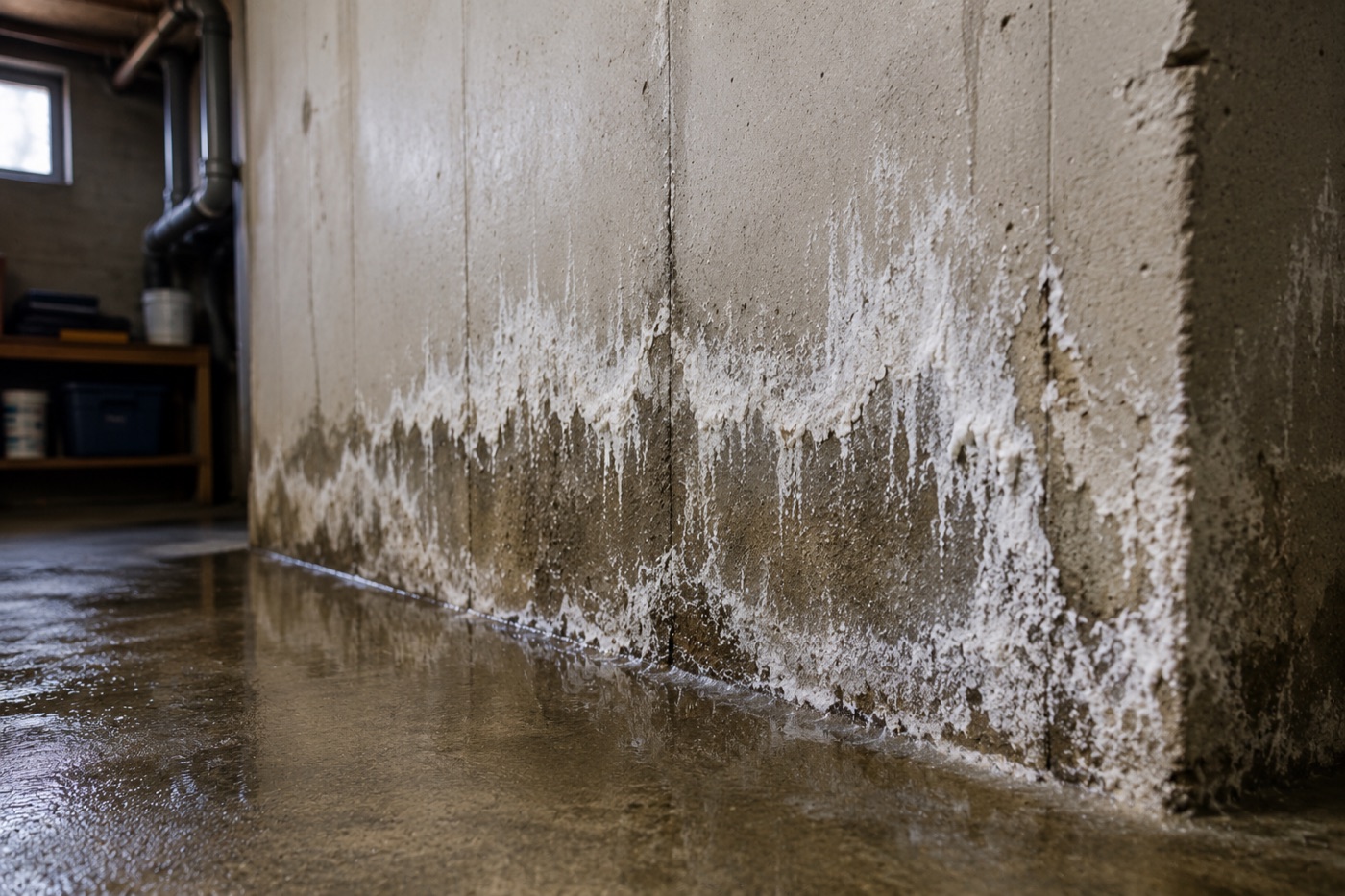
Mould in buildings is a more common problem than many people realise. It can form in flats, detached houses, commercial premises and institutions whenever conditions create a favourable environment for mould fungi. Mould is often the first visible sign of an underlying damp problem, so it is important to take it seriously.
Although many people try to remove the mould itself, in most cases it is necessary to find and solve the cause of the problem. Otherwise there is a risk that the mould will return despite cleaning and repairs.
What is mould?
Mould is a type of fungus that grows wherever there is enough moisture. Mould fungi spread tiny spores that are found almost everywhere in the environment. When the spores land on a damp surface, they can begin to grow and form visible mould.
Mould can form on:
- Showers and baths.
- Cooking areas.
- Washing and clothes drying.
- Washing up.
- The breathing of people and pets.
What are the symptoms of mould in a building?
If air exchange is inadequate, moisture can build up and cause a variety of problems.
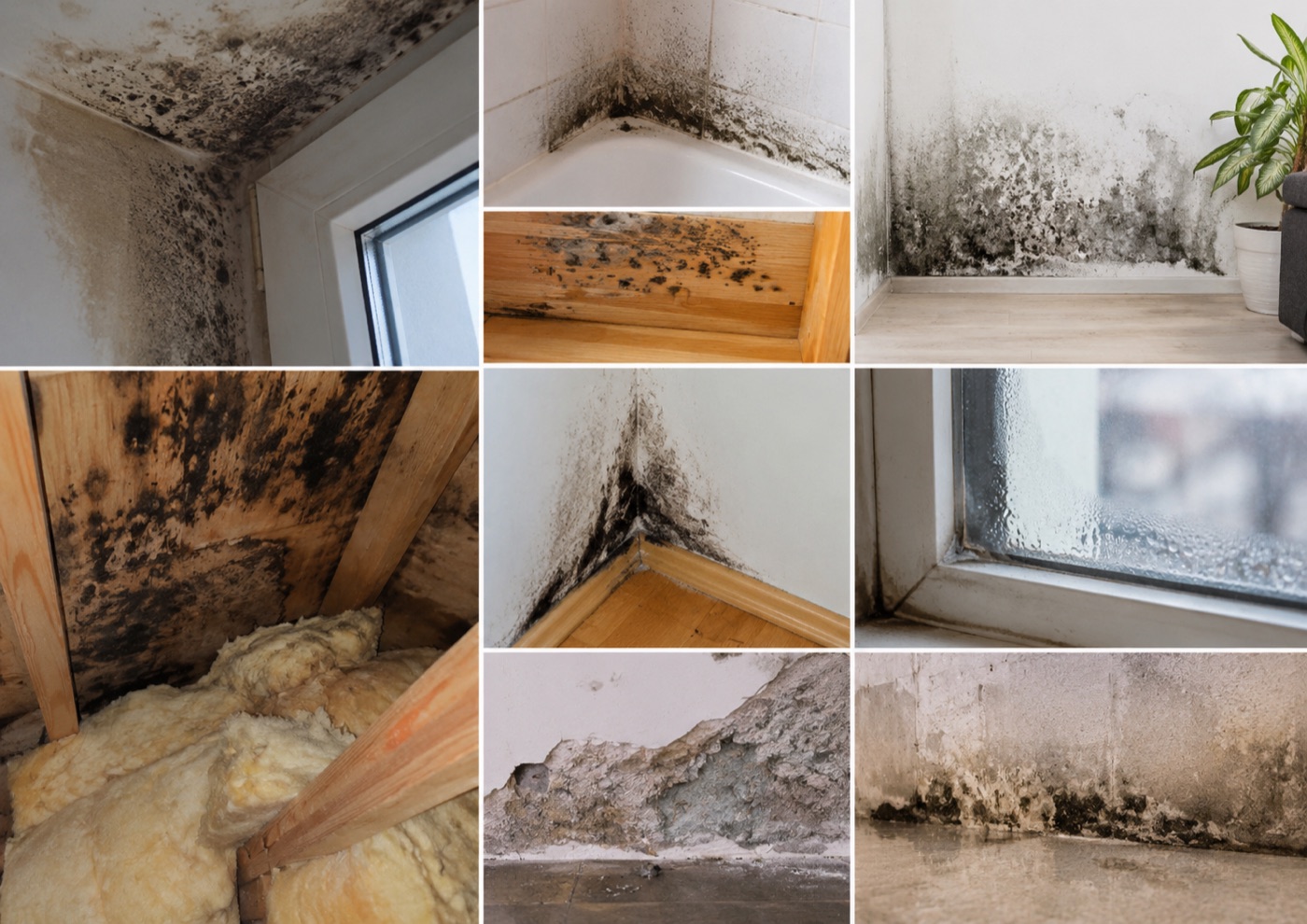
Mould in buildings does not always appear in the same way. The most common signs are:
- Dark or black spots on walls.
- Mould in the corners of rooms.
- Mould in the bathroom.
- Mould in the basement.
- Mould on windows.
- Mould in the roof.
- Musty smell.
- Damp patches on walls.
- Peeling paint.
- Warping of flooring or building materials.
A musty smell is often one of the first signs of a problem, even before the mould becomes visible.
What causes mould?
Mould needs moisture to grow. Mould is therefore usually the consequence of another problem rather than its cause.
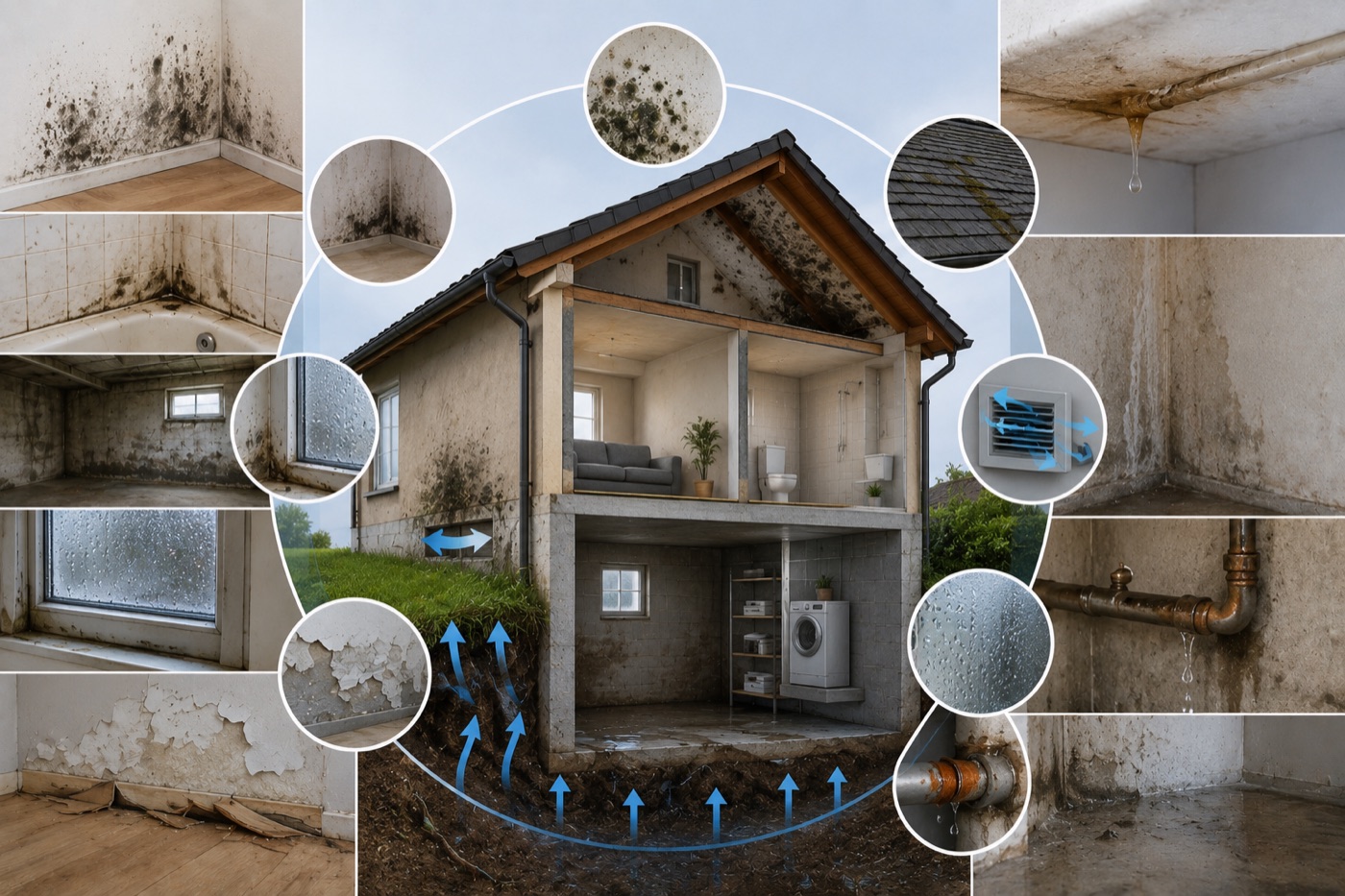
Common causes are:
Rising damp from the ground
Rising damp from the ground can cause persistent moisture in basements, storage rooms and the lower floors of buildings. Such conditions can create ideal conditions for mould.
Poor ventilation
Inadequate air exchange is one of the most common causes of mould in flats and houses. When moisture cannot escape, it builds up indoors and can lead to mould growth.
Condensation
Condensation on windows and on cold surfaces can cause moisture to collect, which increases the likelihood of mould.
Leaks and water ingress
Leaks from pipes, roofs or external walls can also create favourable conditions for mould fungi.
Is mould dangerous?
The effects of mould can vary between individuals and depend on the extent of the problem.
Symptoms often associated with mould and poor air quality include:
- Headaches.
- Fatigue.
- Coughing.
- Nasal congestion.
- Eye irritation.
- Throat irritation.
- Allergy symptoms.
- Worsened symptoms in people with asthma or sensitive respiratory systems.
That is why it is important to take both mould and damp problems seriously.
How do I find mould?
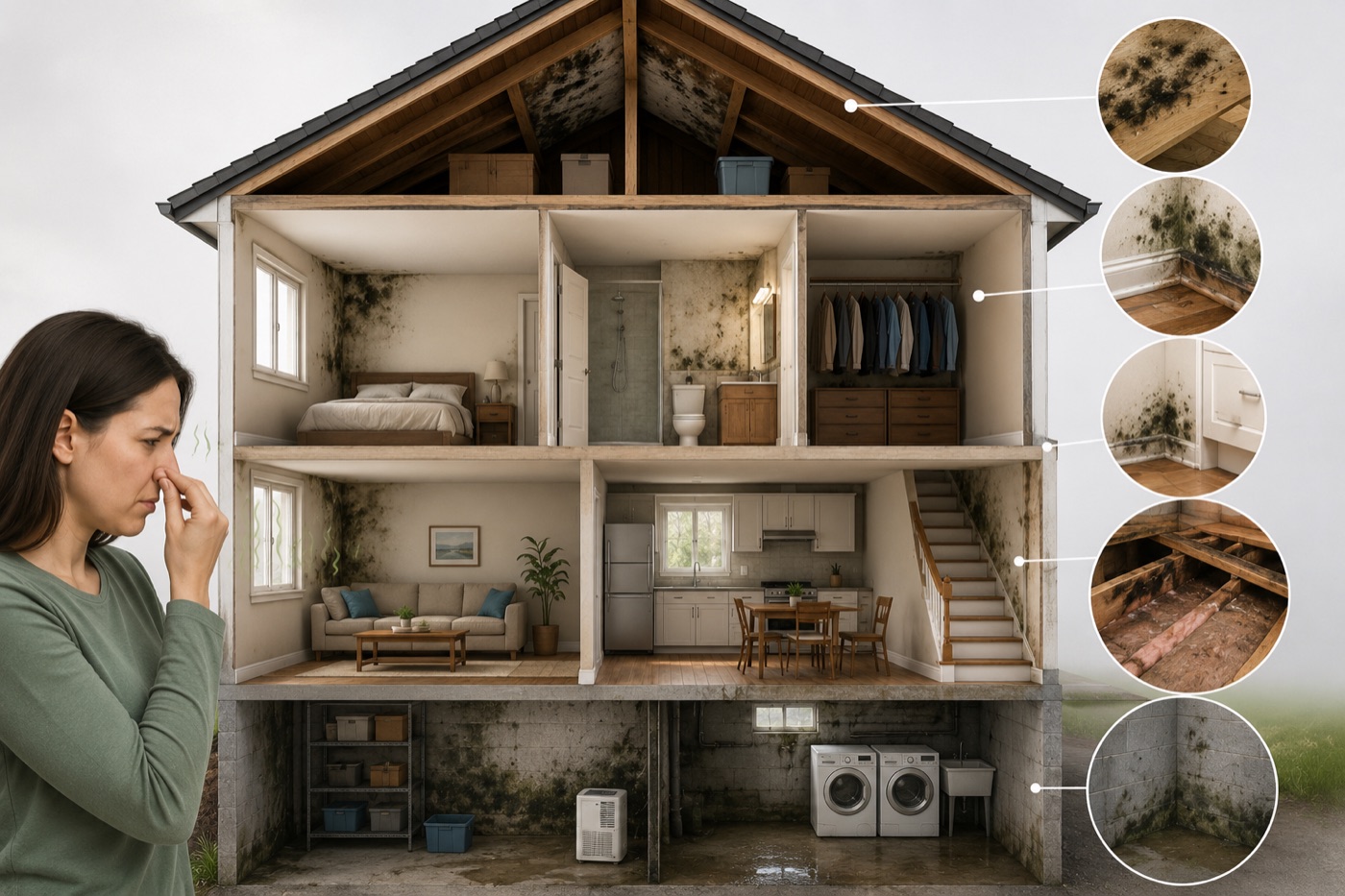
Mould is not always visible. In some cases it can be hidden:
- Behind walls.
- Under parquet flooring.
- Behind fitted furniture.
- In the roof
- In ceilings.
- In basements and storage rooms.
If there is a persistent musty smell without visible mould, there may be reason to have the building professionally inspected.
How do I get rid of mould?
Many people try to clean mould with cleaning agents or paint. Such measures can remove the visible traces temporarily but rarely solve the underlying cause.
To achieve lasting results you need to:
- Identify the source of the moisture.
- Correct the cause of the problem.
- Remove damaged materials if necessary.
- Improve air exchange and air quality where applicable.
If moisture continues to enter the building, there is a risk that the mould will return.
How can mould be prevented?
The best protection against mould is to prevent persistent moisture.
Good advice includes:
- Maintain good air exchange.
- Monitor indoor humidity.
- Respond quickly to leaks.
- Reduce condensation.
- Prevent rising damp from the ground where applicable.
- Ensure good ventilation in bathrooms, laundry rooms and kitchens.
Conclusion
Mould in buildings is usually a sign of an underlying damp problem. Whether the cause is rising damp from the ground, condensation, poor ventilation or a leak, it is important to diagnose the problem and tackle the cause itself.
Signs such as a musty smell, mould on walls, mould in the basement, condensation and poor air quality should never be ignored. With the right diagnosis and appropriate remedies, both the condition of the building and the air quality can be improved for the long term.
Are you struggling with mould or damp problems?
Mould is often the result of rising damp from the ground or inadequate air exchange. Find out how solutions for damp problems and ventilation solutions can help to create a healthier indoor climate.
Discover our ventilation solutions
Loftvist offers a wide range of ventilation solutions and a free indoor air quality assessment. We evaluate the conditions and help you find a solution that suits your property.
Get in touch with us today
We help you find the right solution and the best offer at a price that suits you.